
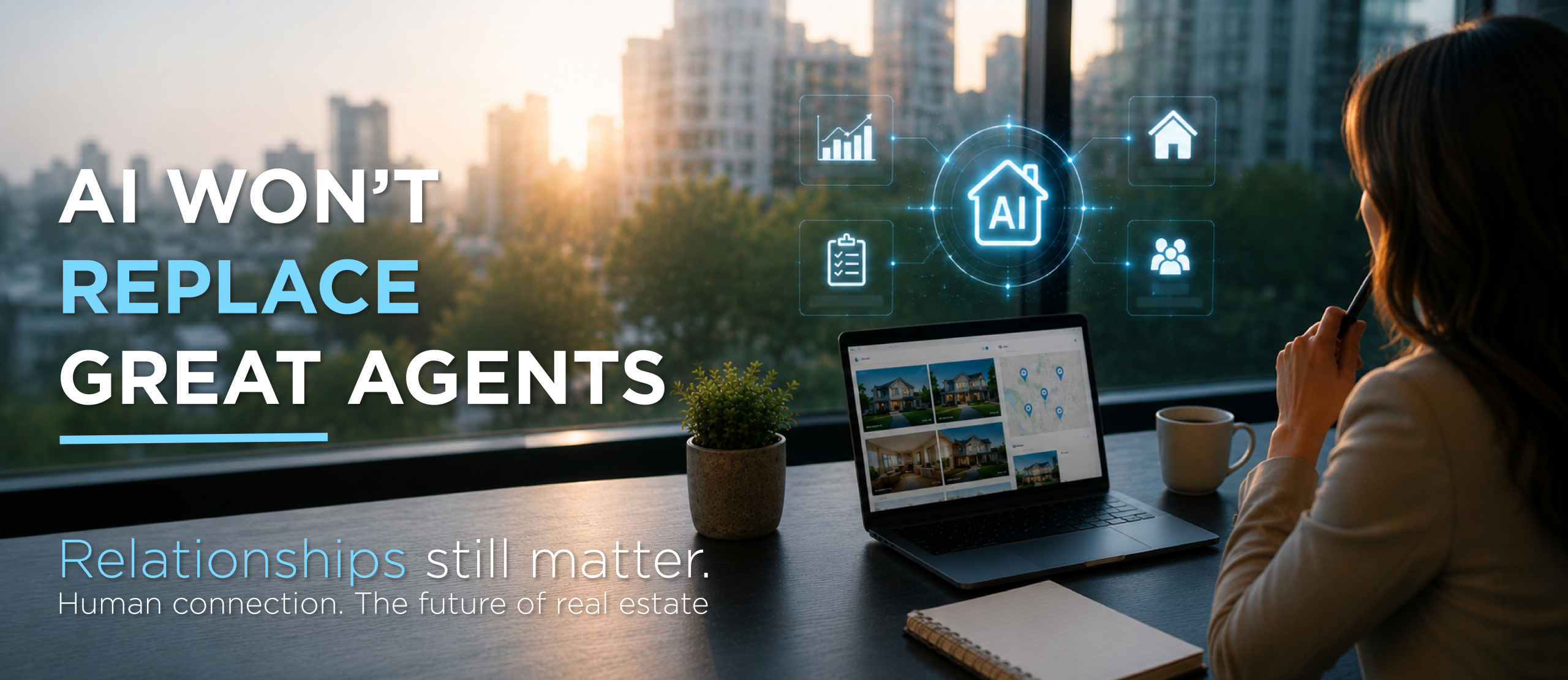
Will AI Help or Hurt the Real Estate Industry?
Artificial Intelligence is changing nearly every industry, and real estate is no exception. From automated property valuations to AI-generated listing descriptions and chatbots answering questions at midnight, technology is moving fast. Some people believe AI will eventually replace real estate agents entirely.
But the reality is more nuanced.
AI will absolutely change real estate. It will make agents faster, more informed, and more efficient. It may even replace some administrative tasks that once consumed hours of an agent’s day. However, there are fundamental parts of real estate that AI simply cannot replicate — because buying and selling property is not just a transaction. It is a deeply human process built on trust, negotiation, emotion, timing, and local expertise.
How AI Is Already Helping Real Estate
There is no question that AI offers major benefits to the industry.
Faster Communication
AI-powered chat tools can instantly respond to inquiries, schedule appointments, answer common questions, and follow up with leads. Consumers increasingly expect quick responses, and AI helps agents deliver them.
Better Marketing
AI can help create listing descriptions, social media posts, email campaigns, video scripts, and targeted advertising faster than ever before. Agents can spend less time writing content and more time serving clients.
Smarter Data Analysis
AI can process market trends, pricing history, buyer behavior, and neighborhood data in seconds. This helps agents identify opportunities and provide stronger guidance to clients.
Improved Efficiency
Many repetitive tasks — paperwork reminders, CRM updates, lead categorization, and scheduling — can now be partially automated. This allows agents to focus on higher-value work.
In many ways, AI will help good agents become even better agents.
Why AI Will Never Fully Replace Real Estate Agents
Despite rapid advances in technology, there are several reasons AI is unlikely to replace skilled real estate professionals.
Real Estate Is Emotional, Not Just Financial
A home purchase is often the largest financial decision a person will ever make. But it is also emotional.
People buy homes because they are getting married, having children, relocating for work, downsizing after retirement, or navigating divorce or loss. These situations involve stress, uncertainty, and deeply personal priorities.
AI can analyze data. It cannot genuinely understand human emotion, build trust, or guide someone through a life-changing decision with empathy and confidence.
Negotiation Requires Human Judgment
Successful negotiation is rarely just about price.
Experienced agents read tone, timing, motivation, personality, and emotion. They know when to push, when to pause, and when to creatively solve problems to keep a deal alive.
AI can suggest strategies based on patterns. But real negotiations involve nuance, unpredictability, and interpersonal dynamics that cannot be fully automated.
Local Knowledge Matters
Real estate is hyper-local.
Two homes on the same street may have dramatically different value depending on traffic flow, neighborhood reputation, future development plans, school perception, or even community culture.
Great agents know details that rarely exist in databases:
- Which neighborhoods are gaining momentum
- Which builders have strong reputations
- Which areas flood during spring runoff
- Which streets buyers avoid
- Which listings are overpriced despite online estimates
AI depends on available data. Top agents provide context and insight that data alone cannot capture.
Transactions Are Rarely Simple
Real estate deals often involve unexpected complications:
- Financing issues
- Inspection negotiations
- Title problems
- Appraisal disputes
- Probate or estate sales
- Difficult personalities
- Contract misunderstandings
- Last-minute emergencies
When deals become complicated, clients do not want a chatbot. They want a calm, experienced professional who can solve problems in real time.
Trust Still Drives Business
People do business with people they trust.
Consumers want someone accountable guiding them through contracts, negotiations, deadlines, and legal obligations. They want reassurance when things get stressful and confidence that someone is protecting their interests.
That relationship cannot be automated.
The Future of Real Estate: AI + Agents
The most likely future is not “AI versus agents.”
It is agents who effectively use AI outperforming agents who ignore it.
The industry has seen this pattern before:
- Online listings did not eliminate agents.
- Zillow did not eliminate agents.
- Electronic signatures did not eliminate agents.
- Virtual tours did not eliminate agents.
Instead, technology changed consumer expectations and raised the standard for service.
AI will do the same.
The agents who thrive will be those who combine technology with strong communication, market knowledge, negotiation skills, and authentic human relationships.
Final Thoughts
AI will absolutely reshape the real estate industry. It will automate repetitive tasks, improve efficiency, and give consumers faster access to information.
But real estate is ultimately a relationship business.
People do not just need information when buying or selling property. They need judgment, advocacy, strategy, reassurance, and trust. Those are human qualities — and they remain at the core of what great real estate agents provide.
The future of real estate is not less human.
It is technology supporting stronger human expertise.


